
Pocket sliding doors the solution for Putney extension
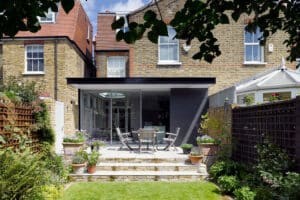
The owners of this Victorian home in Putney set out to transform their ground floor into a bright, open-plan family living space with a strong visual and physical connection to the garden. Like many urban terraced properties, the house suffered from a narrow layout and a dated lean-to conservatory that restricted light and limited how the space could be used.
Replacing the existing structure with a modern single-storey extension offered the opportunity to reconfigure the rear of the property and create a contemporary kitchen and dining area tailored to modern family life.
Reimagining the ground floor layout
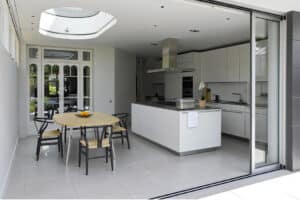
The new extension was designed to wrap around the side return, unlocking valuable additional floor space and allowing for a generous kitchen-dining area complete with a central island. This approach not only improved the functionality of the home but also created a clear focal point for everyday living and entertaining.
By removing the conservatory and extending into the side return, the homeowners were able to create a more cohesive layout that flows more naturally from the original house into the new extension.
Glazing design and early collaboration
Maximising natural light was a core part of the design brief. The initial intention was to install bifold doors to open the extension onto the garden. However, early discussions with an IDSystems project advisor prompted the homeowners to explore alternative glazing solutions.
Through this collaborative process, theEDGE2.0 sliding door system quickly emerged as the ideal choice, offering a more refined aesthetic and greater design flexibility thanks to its ultra-slim framing.
Pocket sliding configuration and flush threshold detail
With intermediate frames measuring just 20mm wide, theEDGE2.0 allowed for larger glass panels and a significantly more minimal appearance than traditional bifold doors. This maximised daylight penetration and maintained uninterrupted views of the garden, enhancing the sense of openness throughout the space. To achieve the most seamless connection between inside and out, the sliding doors were designed as a pocket system. When open, the panels slide completely into a concealed wall pocket, creating a clear and unobstructed opening.
An extended track was fully recessed into the floor, delivering a level threshold while maintaining excellent weather performance. This detail was key to achieving a smooth transition from the internal floor finish to the external patio.
Maximising natural light
In addition to the large sliding doors, further glazing elements were incorporated to ensure the extension remains light-filled throughout the day and across all seasons. Three large clerestory windows were installed above the party wall to introduce additional daylight later in the afternoon, while a frameless rooflight within the flat roof creates pockets of natural light that enhance the sense of space and depth within the extension.
Kitchen design considerations
Specifying a pocket sliding door required minor adjustments to the kitchen layout during the design phase. However, this allowed the homeowners to maximise usable floor space and fully integrate the sliding panels without compromising the functionality of the room.
The final layout comfortably accommodates a large kitchen island, reinforcing the extension’s role as a central hub for family life and entertaining.
The finished result
The completed extension delivers a contemporary, light-filled living space that feels visually connected to the garden at all times. Even when the doors are closed, the slim frames and expansive glass ensure a strong relationship between inside and out.
Speaking about the project, IDSystems Sales Manager Edward Stobart commented:
“Pocket sliding doors have become increasingly popular because they overcome the one real limitation of conventional sliding doors – the need for a fixed stacking area. Being involved early in the design phase made a real difference on this project, allowing us to develop a solution that was perfectly aligned with what the homeowners wanted to achieve.
We pride ourselves not only on supplying technically advanced glazing systems, but also on more than 25 years’ experience. In this instance, the ultra-slim frames of theEDGE2.0 combined with large glass panels ensure that the house and garden feel connected at all times, while the pocket configuration allows the opening to be completely clear.”
This project is a strong example of how early collaboration, considered glazing design and minimal framing can come together to transform a home, delivering both architectural impact and everyday practicality.
Location: Putney, South West London
Architect: Matthew Heywood Architects
Photos: Chris Snook Photography
Gallery