

Can you put blinds on sliding doors?
Glazed aluminium sliding doors are a defining feature of modern homes, offering slim sightlines, expansive views, and a seamless connection between indoor and outdoor spaces. However, when it comes to privacy, light control, and thermal comfort, many homeowners find themselves asking the same questions: can you put blinds on sliding doors, and if so, which options work best?
Whilst it is possible to include integral blinds within the glass for bifold doors, French doors and windows, when it comes to sliding doors the large panes of glass and the mechanics of how the systems work mean that integrated blinds aren’t a practical solution – so how do you have blinds with sliding doors?
The answer depends on your home and what you are trying to achieve with the blinds. Finding the right blinds for sliding doors is about balancing light control, privacy, and the smooth operation of your doors.
From modern panel tracks to classic vertical options, the right choice can enhance the thermal efficiency and aesthetic of your aluminium sliding doors.
Below, we explore the best methods for fixing, measuring, and choosing the perfect sliding door blinds for your home. If you are looking to add blinds to bifold doors, check out our guide, Can you have blinds in bifold doors?
- How do you install blinds for a sliding glass door?
- How do you measure blinds for a sliding glass door?
- What type of blind is best for sliding doors?
- Enhance your sliding doors
How do you install blinds for a sliding glass door?
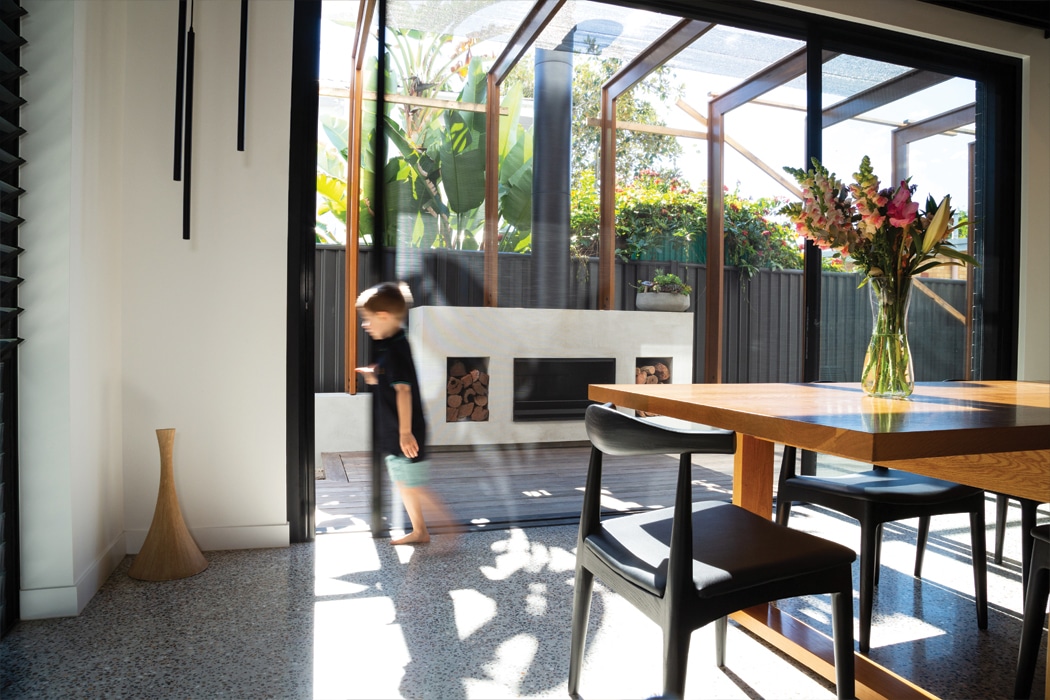
Because sliding doors move horizontally, any blind system must allow for unobstructed operation. In most cases, blinds are installed above the door frame in what’s known as an outside recess fitting. This approach ensures the doors can open and close freely while still providing full coverage. Inside recess installations are possible, but only if there is sufficient depth and clearance within the opening.
- Recess fit. Sliding screens can be recessed into the side reveal of the doors. Set internally to the tracks of the doors the retractable sun shades and insect screens offer a stylish solution for inside-outside living. Available in a range of colours, fabric types and configuration options to offer privacy and protection from the sun.
- Ceiling mounted. This is often the most popular method. By mounting on the ceiling above the frame, the doors can slide freely without hitting the blinds. Ceiling mounted blinds can be roller blinds, Venetian blinds or Roman blinds.
- Integrated. Not an option for sliding, but for slide and turn door systems and aluminium bifold doors, IDSystems offer integrated Venetian and pleated blind. This approach sees a Venetian, pleated, or blackout blind fitted between the glass of a double or triple-glazed unit, creating a maintenance-free way to create privacy or reduce glare.
- External blinds. An increasingly popular option, external blinds sit on the outside of the glass and prevent direct sunshine reaching the door system. By preventing sunlight reaching the glass these blinds can significantly reduce overheating.
How do you measure blinds for a sliding glass door?
Accurate measuring is essential to achieve a clean finish and proper functionality. For most sliding doors, an outside recess measurement is recommended. This involves measuring the full width of the opening and allowing for additional overlap on each side to ensure full coverage and minimise light gaps.
The drop is measured from the intended fixing point down to the desired finish, which is often just below the door frame or to floor level. If fitting within a recess, it’s important to measure in multiple places and use the smallest dimensions, while also confirming there is enough depth for the blind mechanism.
Recess fit
On our sliding screens and shades the blinds are incorporated alongside a new door system and not suited for retro-fitting to existing systems. When it comes to measuring the size of the blinds we can take the measurements from the size and configuration of the sliding doors to ensure they fit perfectly.
Ceiling mounted
A wall-mounted blind is positioned in front of the opening, meaning the blind will be wider than the door and block out more light than a recessed model.
Measuring for ceiling mounted roller blinds above sliding doors requires a slightly different approach compared to standard wall-fixed installations, as accuracy is critical to ensure smooth operation and full coverage. The first step is to measure the overall width of the opening, taking into account the full span of the sliding doors. For the best results, it is recommended to extend the blind beyond the door frame on both sides. This overlap helps to reduce light gaps and improves privacy, while also creating a more balanced, visually appealing finish.
When measuring the drop, start from the exact ceiling fixing point and measure down to your desired endpoint. In most cases, this will either be just below the door frame or all the way to floor level, depending on your design preference. It is important to consider any obstructions, such as door handles or frames, to ensure the blind can hang freely without interference.
For wider sliding doors, multiple roller blinds are often the most practical solution. Measuring each section individually allows for greater flexibility and easier access, especially if the doors are used frequently. Consistent spacing and alignment between each blind will help achieve a clean, cohesive look.
Stacking depth should also be considered when measuring up. This is the amount of space that fully opened blinds will take up, and will vary depending on the style and size of the blinds. Factor this in when measuring for both mounting types to reduce the amount of glass covered when the blinds are fully open.
“The most common mistake people make when measuring for blinds is forgetting the ‘stacking depth’. If you choose vertical blinds that drop down from the ceiling, remember that when the door is fully open, those blinds have to bunch up somewhere,” Edward Stobart explains. “Ensure your track extends past the door opening so the blinds don’t block your view, or the breeze when the doors are open.”
What type of blind is best for sliding doors?
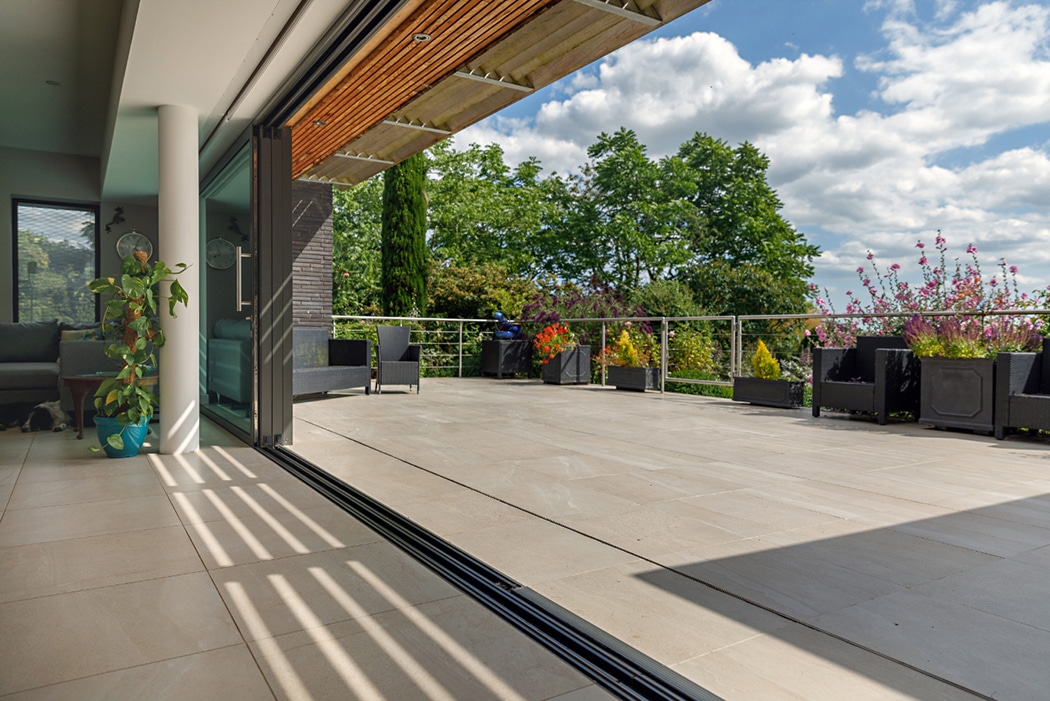
Having worked out how the blinds will fit with your sliding doors and measured up, the next question is which styles and types of blinds are best suited for use on a sliding door?
Whether you are looking to soften the light in a living room or ensure privacy in a bedroom, the goal is to find a window treatment that complements the sleek aluminium frames without cluttering the view.
Here are some examples of popular style options;
Roller blinds
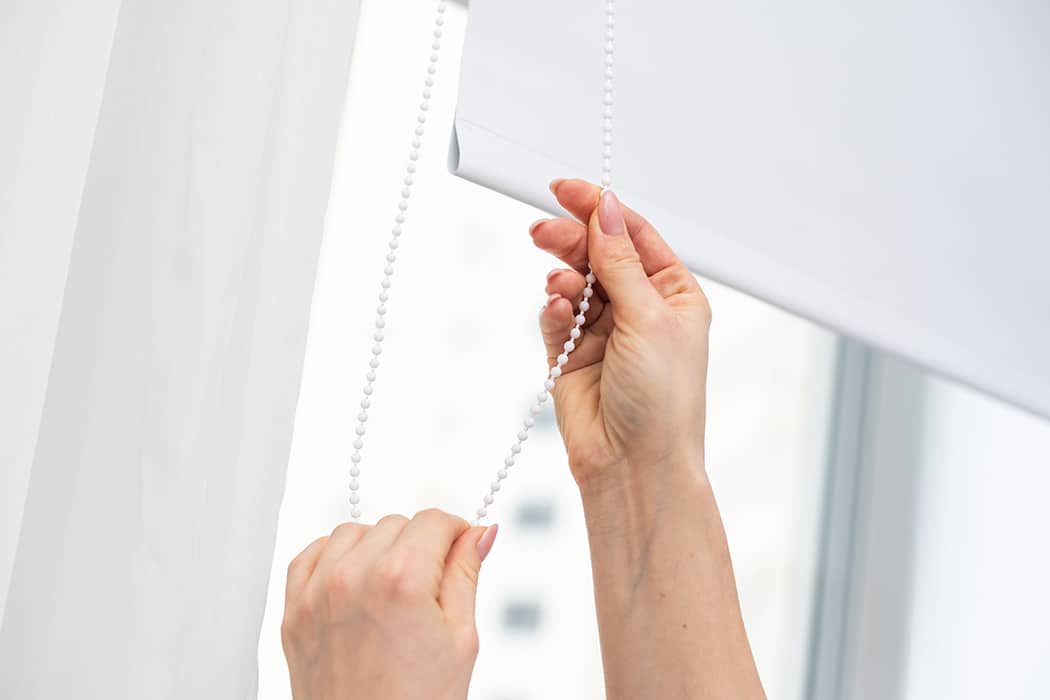
Rollerblinds are a simple, popular, and modern choice. But be aware that because sliding doors are wide, you will likely need multiple blinds side-by-side.
How they work: Usually, they are installed above the door and roll up neatly to vanish out of sight, leaving your view completely unobstructed when open. The most efficient way of designing the blinds is to opt for one blind per panel – this gives you flexibility when opening the doors.
Best for: Those who want a minimalist look and want to maximise the view through large-panelled sliding doors.
Venetian blinds
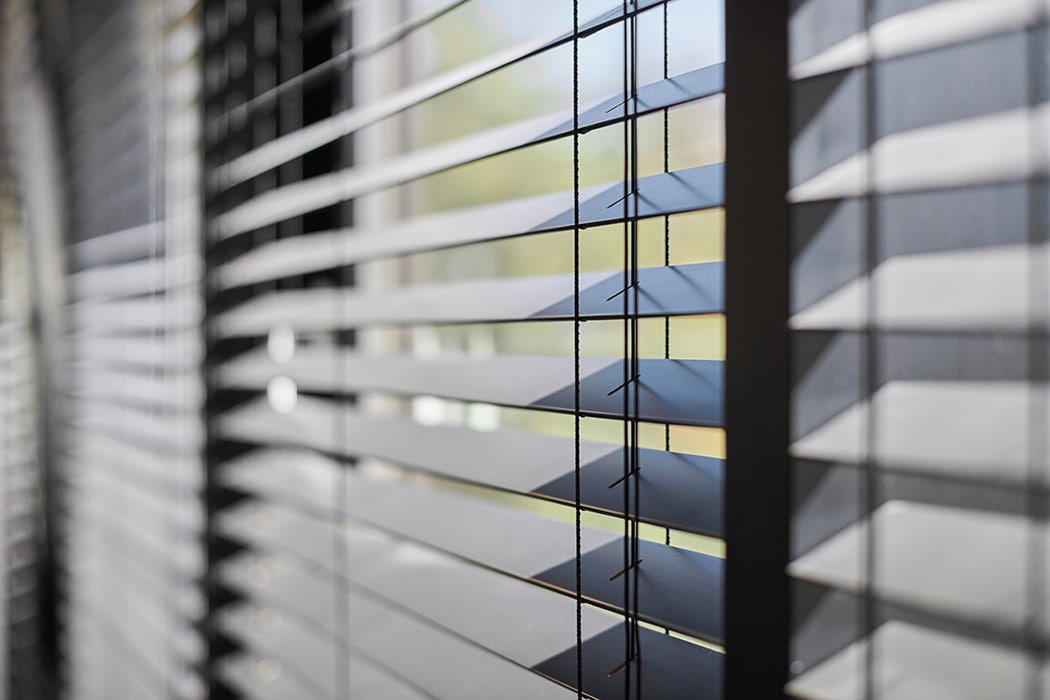
Vertical Venetian blinds remain a hugely popular option for many people simply because they are incredibly practical.
How they work: Individual slats hang vertically from a track and can be tilted to filter light or drawn back completely.
Best for: Precise light control, allowing for glare to be reduced without having to give up all natural light.
“Venetian blinds often have a reputation for looking like office decor, but they are actually one of the most effective solutions for controlling glare,” says Edward Stobart. “To keep it modern, opt for wider fabric slats and avoid the connecting chains at the bottom for a cleaner, free-flowing look.”
Sliding screens
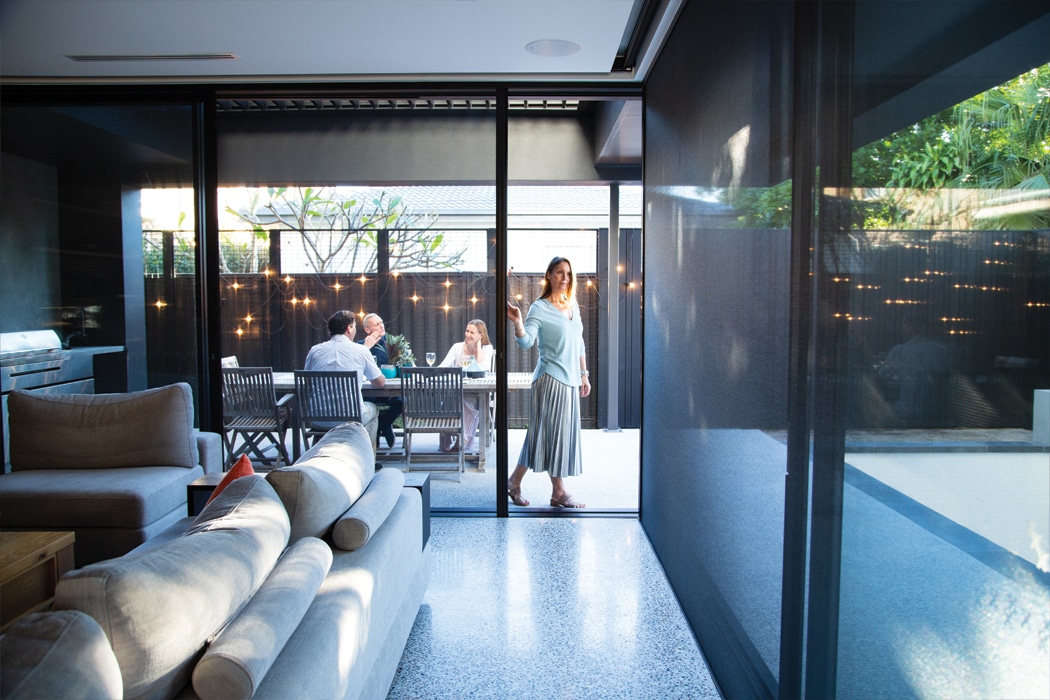
If you are looking for an alternative to vertical blinds, sliding shades could be an effective option.
How they work: Large, wide panels of fabric roll out from a cassette from the side along a track. Whether you opt for a blackout style sun screen or choose an insect screen (or go for a double cassette that features both) the panels slide in a similar way to the door itself. This makes them the ideal companion for the ultra-slim sightlines of theEDGE2.0 system.
Best for: Very wide openings created by sliding doors. Flexible for full blackout or insect screen – or both.
Roman blinds
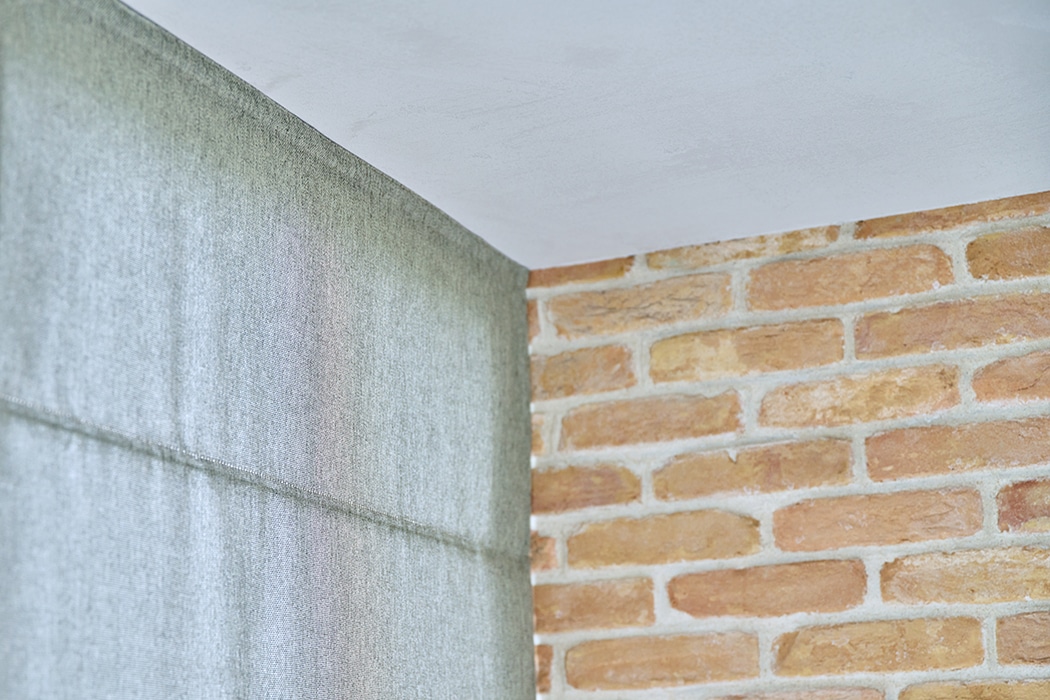
If roller or Venetian blinds look too ‘office-like’ or clinical, Roman blinds offer a softer, more furnished alternative. They bring the feel of curtains to your sliding patio doors without the floor-to-ceiling bulk.
How they work: Roman blinds are made from fabric that folds into horizontal pleats when raised. When fully open, these pleats stack neatly at the top of the window; when lowered, they lie flat to cover the glass completely.
Best for: Living rooms requiring texture and warmth.
“Roman blinds can look great,” says Edward Stobart. “Just ensure you mount them high enough so the ‘stack’ doesn’t cover the top of the glass or sag so you hit your head when walking through.”
External blinds
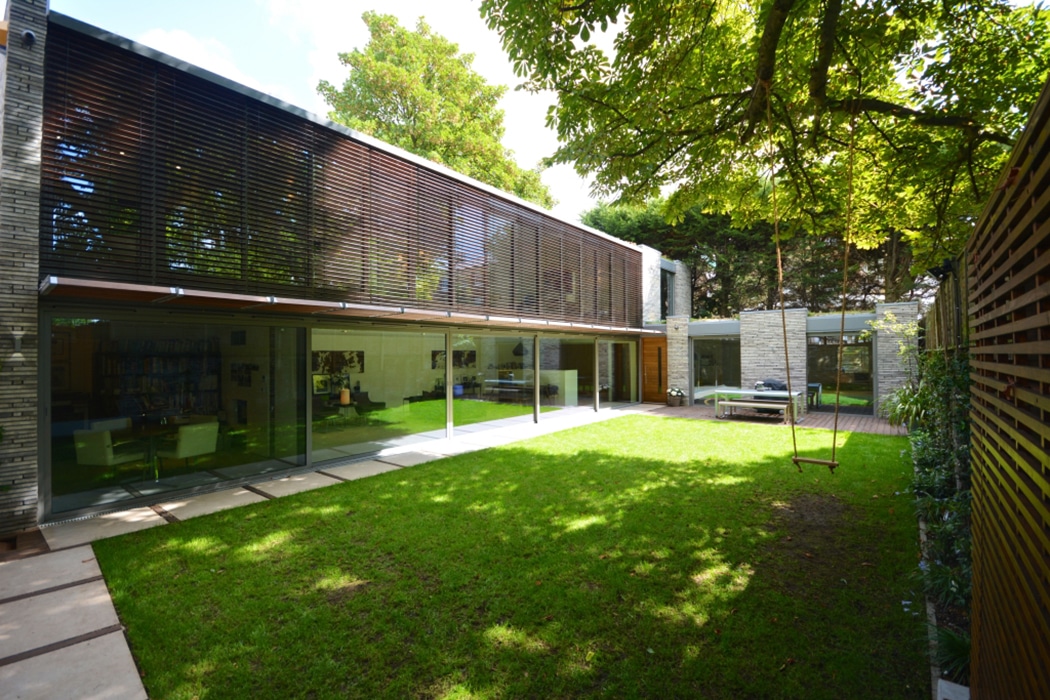
External blinds are a sleek, modern shading solution designed to sit outside the glazing, offering precise control over light, privacy, and solar gain. Made up of horizontal aluminium or timber slats that can be tilted and raised, they allow you to adjust the angle of sunlight entering the space while maintaining outward views.
How they work: Because they are positioned externally, they are highly effective at reducing heat build-up before it reaches the glass, making them ideal for large glazed areas such as sliding doors.
Best for: South facing elevations
Comparison
| Blind type | Pros | Cons | Best for |
| Roller |
|
|
|
| Venetian |
|
|
|
| Sliding screens |
|
|
|
| Roman |
|
|
|
| External |
|
|
|
Enhance your sliding doors
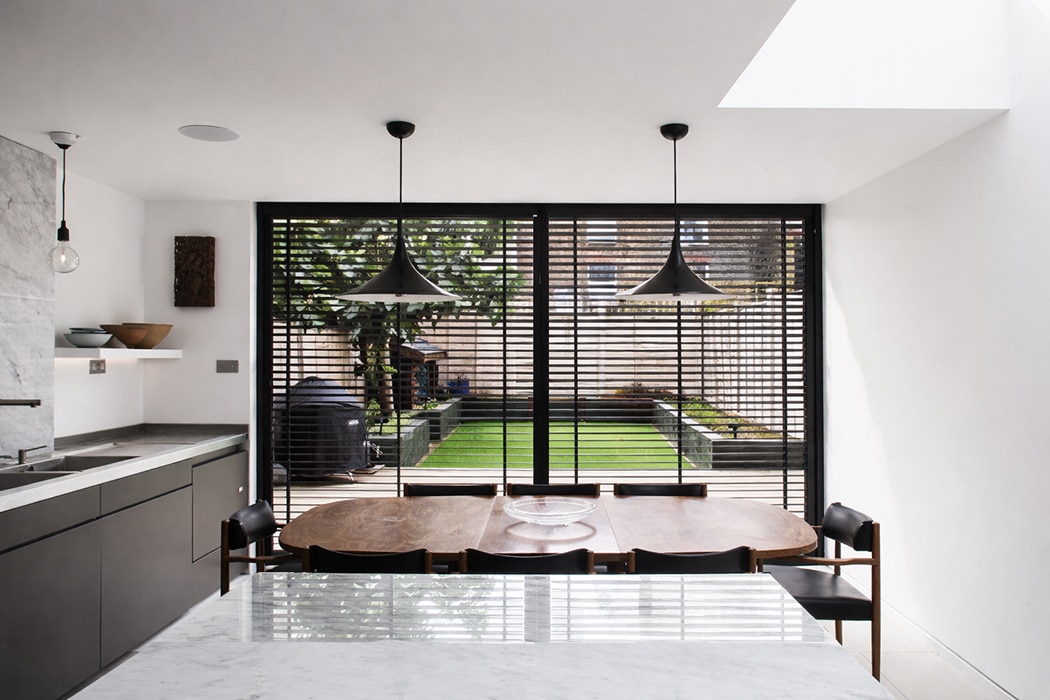
Choosing the right blinds for your sliding doors is likely the finishing touch to your renovation project. Whether you choose the clean lines of a panel blind or the practicality of Venetian blinds, make sure your choice complements your home’s style and the quality of your glazing.
If you are considering upgrading your home with higher-performance sliding or bifold doors, our team can help you find the perfect glazing solution for your space.
Visit the virtual showroom to see our doors in action, or get in touch for a quote and specific technical advice.
For more advice, check out our related guide Can you have blinds in bifold doors? or explore our full aluminium sliding doors range.
