
Refurbishment and extension of mid-terrace Victorian house in Cambridge
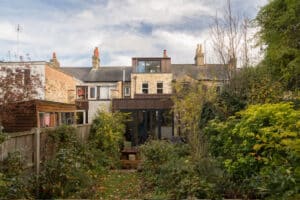
The refurbishment and extension of this mid-terrace Victorian house reimagines a traditional Cambridge city-centre home as a light-filled, contemporary family home. The project carefully balances modern architectural interventions with the retained character of the original building, ensuring that new additions enhance rather than overshadow the home’s period identity.
Working alongside the award-winning Ashworth Parkes Architects, the brief from the owners was focused on improving spatial flow, increasing natural light and creating flexible family spaces, all within the constraints typical of a narrow mid-terrace location.
Reconfiguring the ground floor
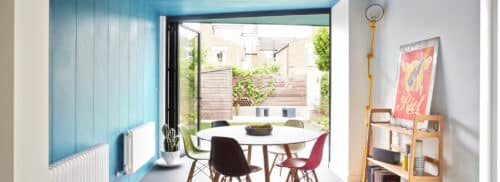
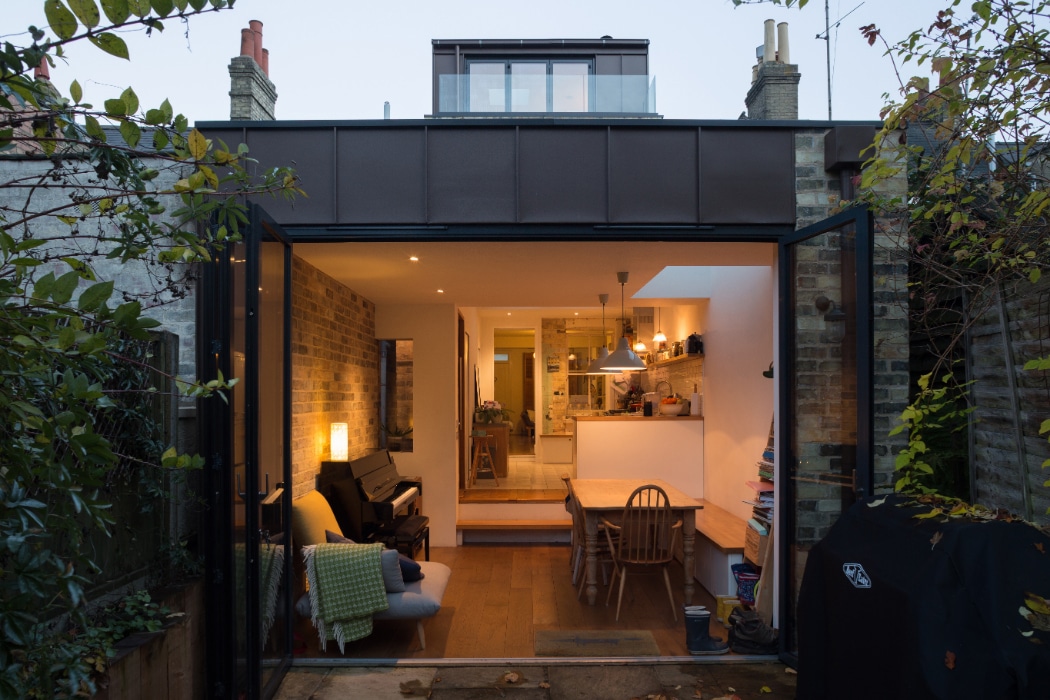
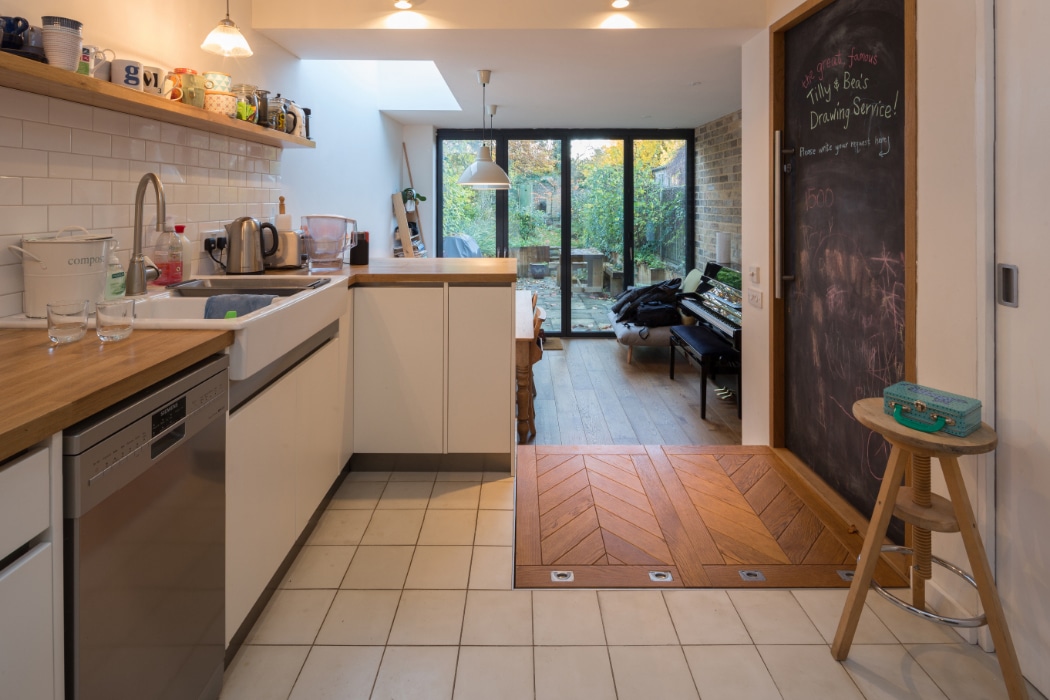
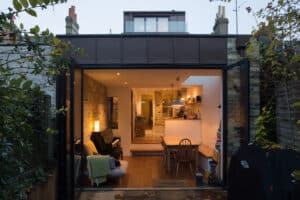
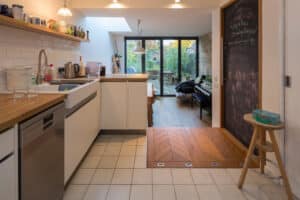
A new rear extension forms the heart of the home, providing a generous kitchen space that steps down into a combined dining and family area. This subtle change in level helps to define zones within the open-plan layout while maintaining a strong visual connection between spaces.
Addressing the challenge of limited daylight often associated with mid-terrace houses, the architects introduced a distinctive butterfly roof. This innovative roof form allows for high-level clerestory windows and flat rooflights, drawing daylight deep into the kitchen and adding architectural interest to the space below. The result is a bright, welcoming environment with a enhanced sense of height and volume.
Seamless connection to the garden
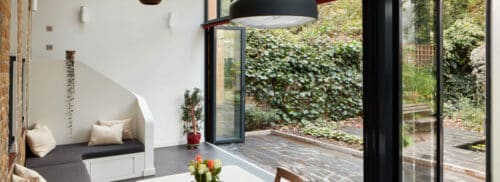
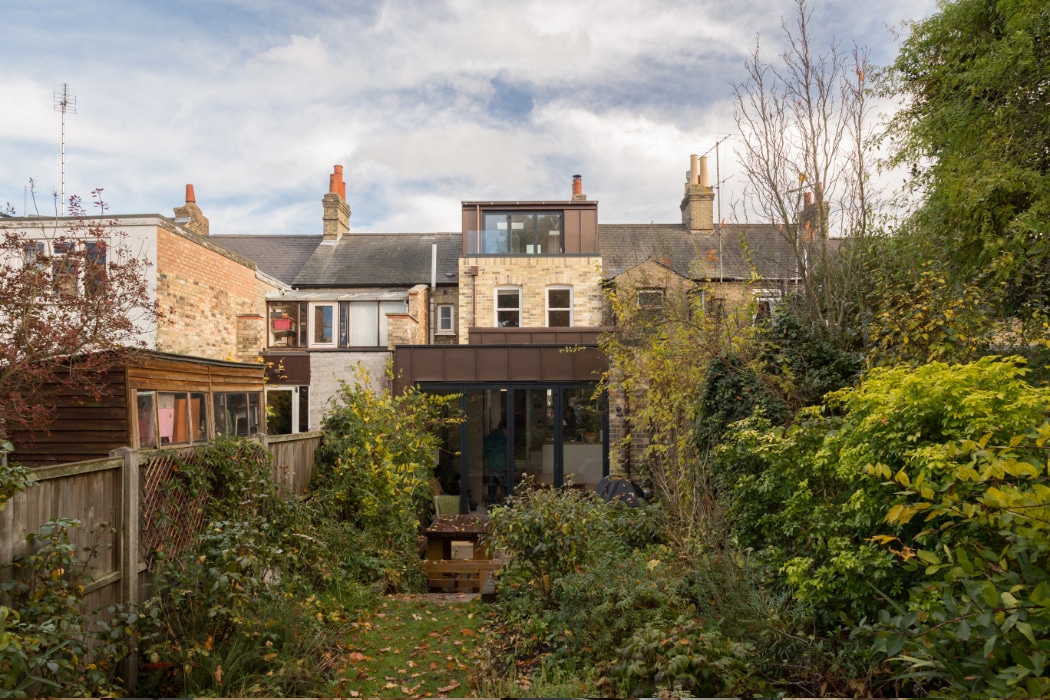
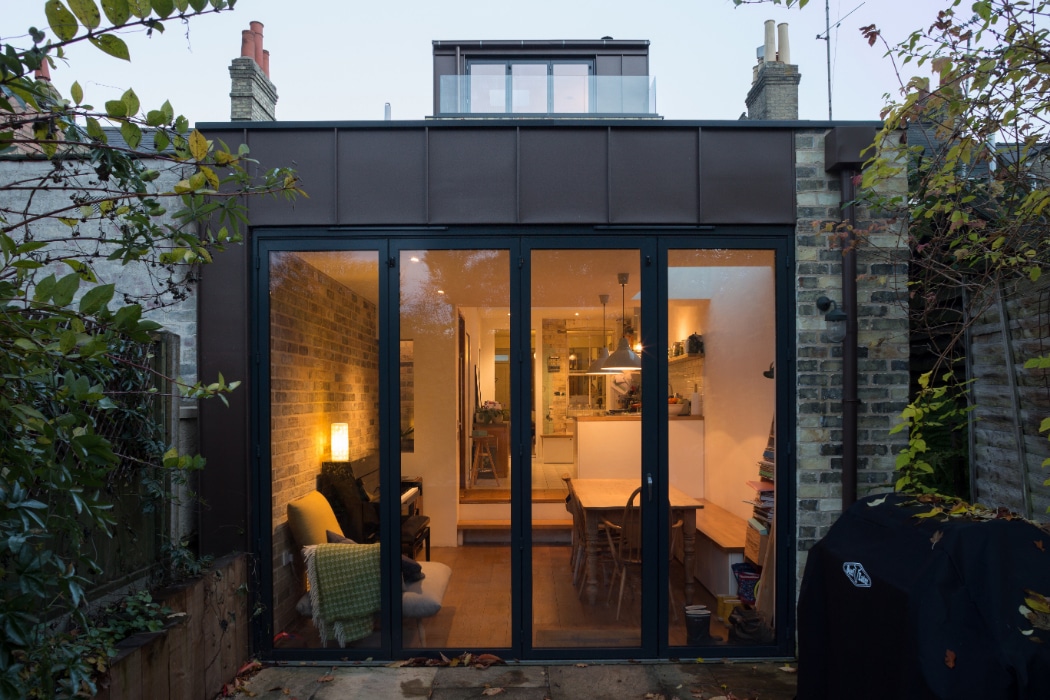
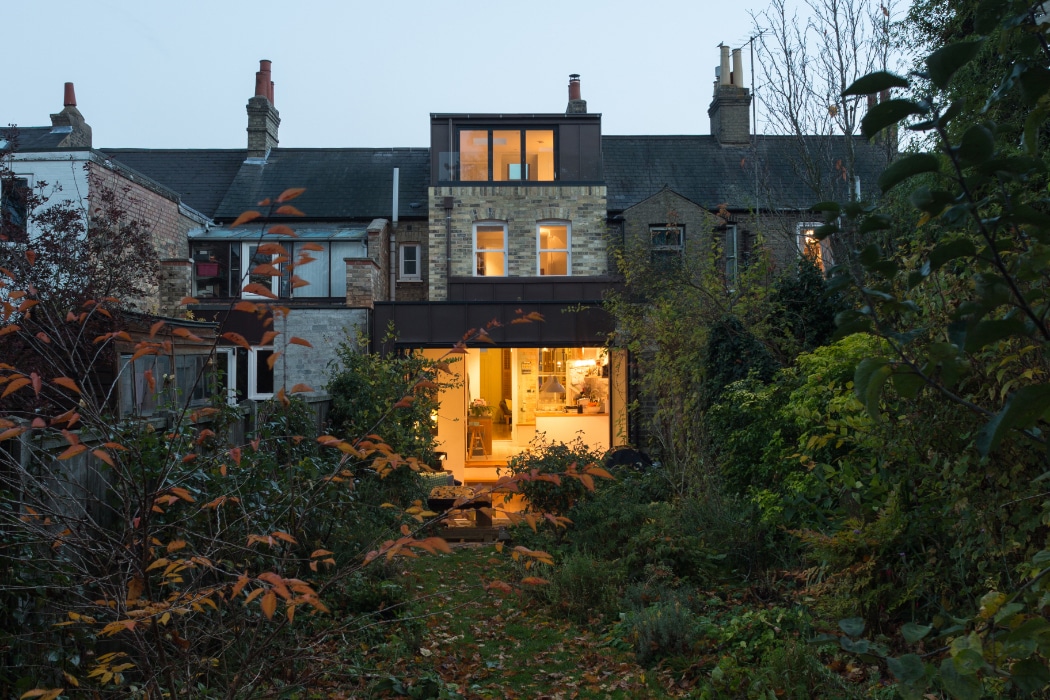
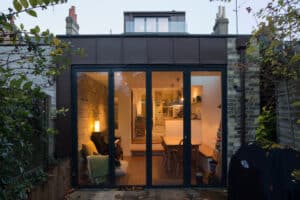
Spanning the rear elevation of the extension is a compact four-panel bifold door system, carefully specified to maximise the opening while minimising the footprint of the stacked panels. This was particularly important given the limited patio space, ensuring the doors could fold neatly without dominating the exterior area.
When open, the doors create a seamless transition between the interior and the garden, reinforcing the sense of openness and extending the living space outdoors during warmer months.
A thoughtful first-floor extension
On the first floor, a modest extension provides valuable additional functionality without disrupting the original proportions of the house. This allowed for the introduction of a new staircase leading to the loft, as well as a discreet laundry cupboard, improving day-to-day practicality while keeping circulation clear and efficient.
Light-filled loft bedroom with rooftop views
The newly converted loft has been transformed into a calm and inviting retreat. A cleverly planned en-suite bathroom is tucked within the front pitched roof, making full use of the existing structure and preserving head height where it matters most.
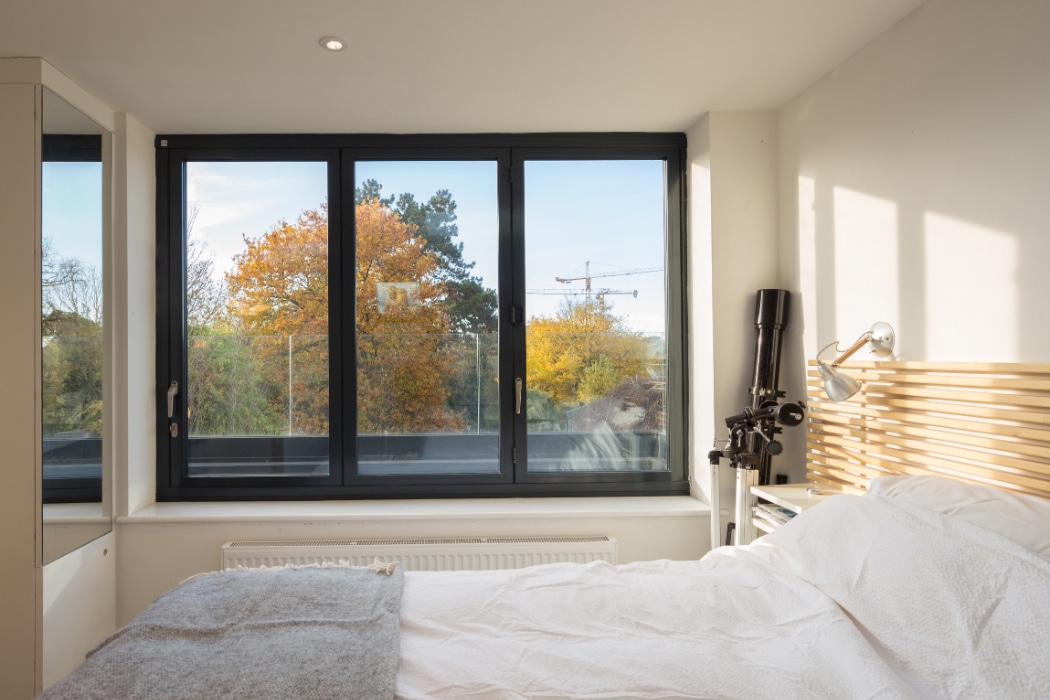
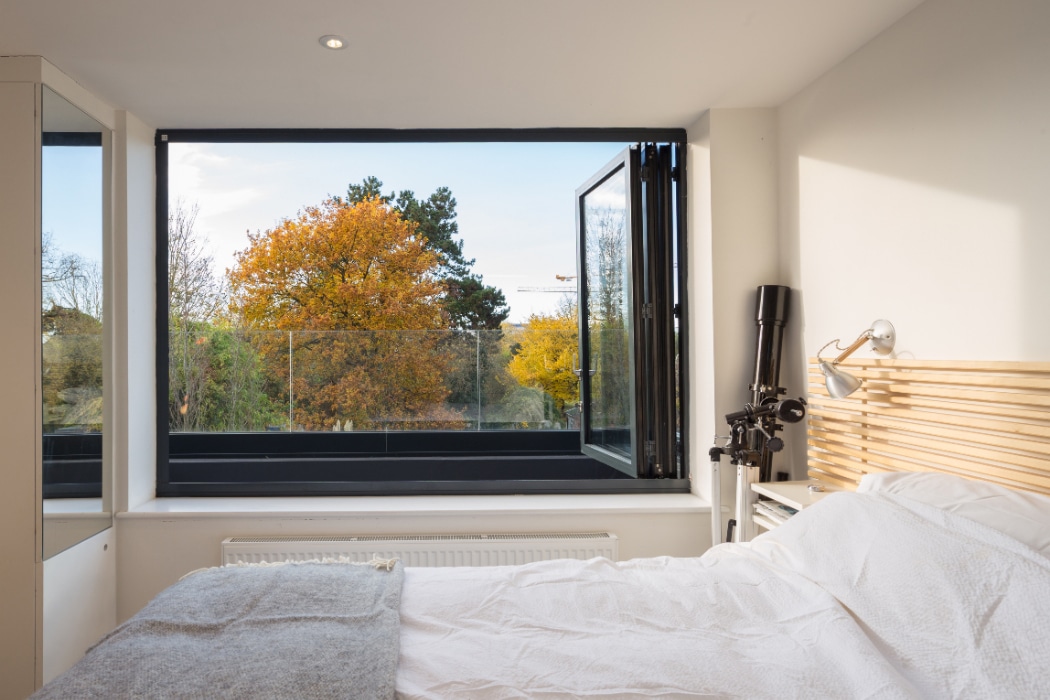
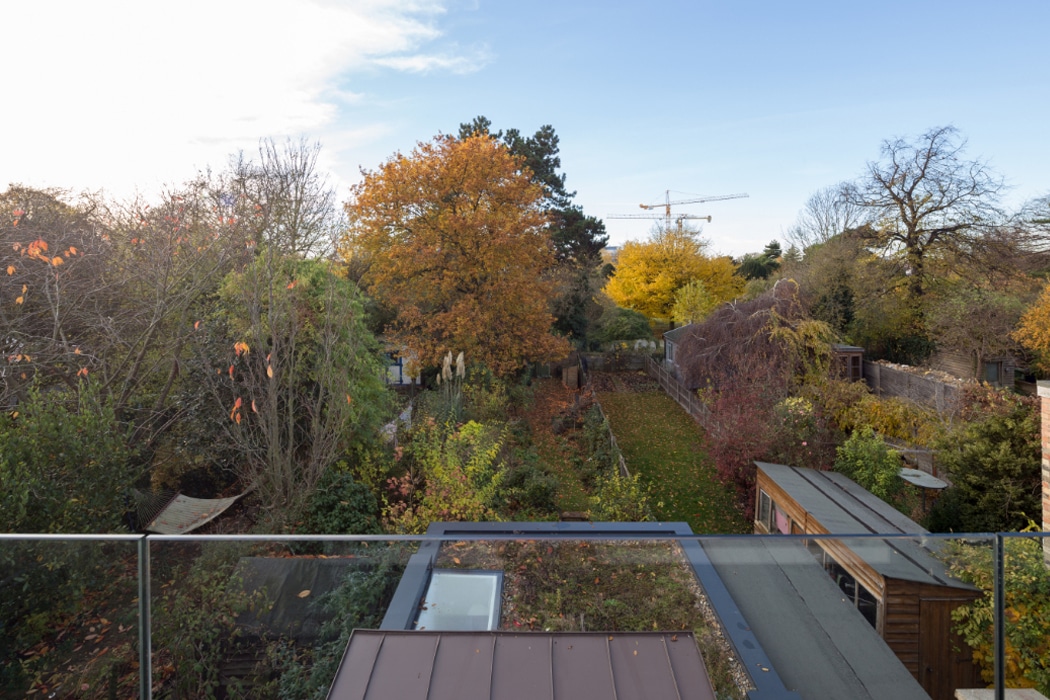
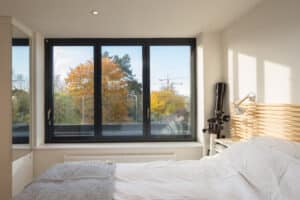
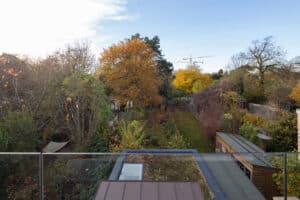
The bedroom itself benefits from dramatic rooftop views, achieved through an innovative bifold window system paired with frameless glass balustrades. This combination opens the space visually while maintaining safety and a clean, contemporary aesthetic. Large flat rooflights further enhance the sense of openness, flooding the compact loft with natural light and making it feel far larger than its footprint suggests.
Material palette and architectural contrast
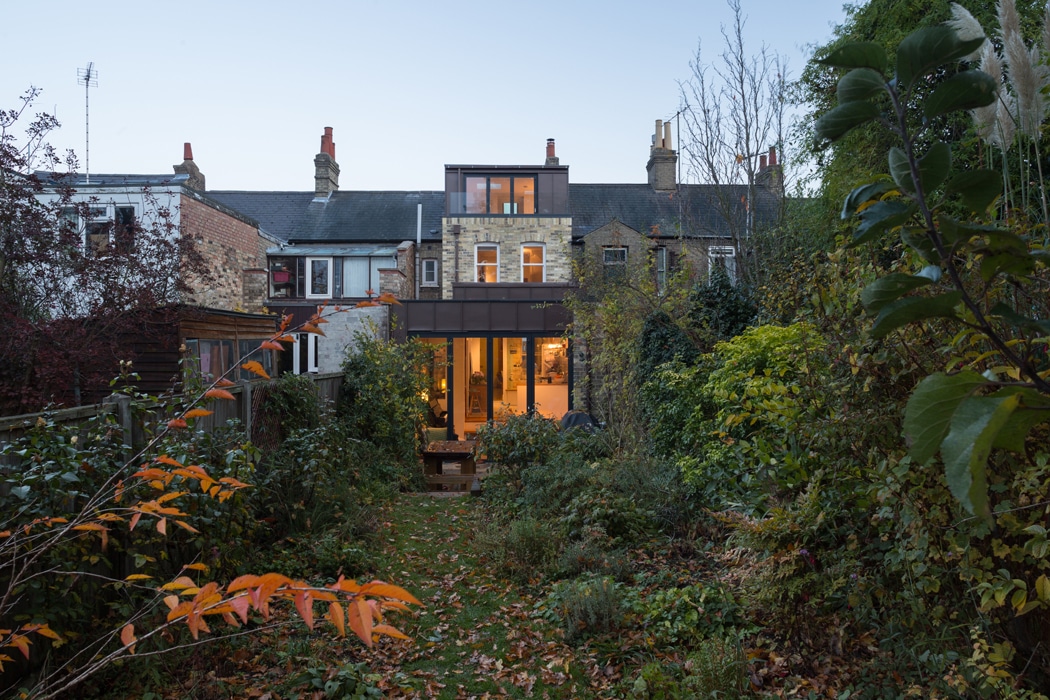
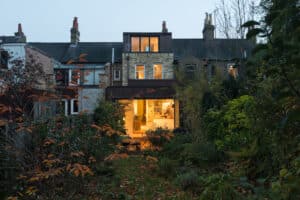
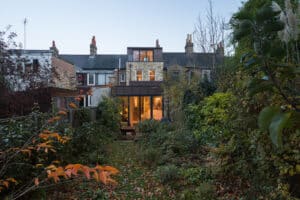
The design carefully preserves the charm of the original Victorian house, while expressing the contemporary nature of the extension. At the rear, brown zinc cladding and reclaimed brickwork provide a modern counterpoint to the traditional façade, creating a distinct yet sympathetic contrast.
Internally, exposed brickwork and timber finishes introduce warmth and texture, softening the modern elements. At the junction between old and new, painted brickwork helps maintain a visual link to the original structure, reinforcing continuity throughout the home.
A green roof with purpose
One of the standout features of the extension is the wildflower-planted green roof. Beyond its ecological benefits, the green roof softens views from the upper floors and neighbouring properties, easing the transition between architecture and garden. This subtle integration of landscape and building enhances the overall experience of the home while contributing to biodiversity in an urban setting.
The end result – a contemporary family home
This project demonstrates how thoughtful design, careful material selection and well-specified glazing solutions can transform a compact Victorian terrace into a modern, light-filled family home. By combining architectural creativity with practical detailing, the refurbishment delivers a home that feels both contemporary and deeply rooted in its original character.
Location: Central Cambridge
Architect: Ashworth Parkes Architects
Photography: Matthew Smith Architectural Photography
Gallery

Featured Case Studies