

Measuring up: standard UK bifold and sliding door sizes
Adding new bifold or sliding doors to your home is a fantastic way to introduce more light and a sense of space to your rooms. But it’s not as simple as picking a standard product from a catalogue. So, before you start shopping, the first consideration should always be taking accurate measurements of your space.
At IDSystems every door system we manufacture and install is made-to-measure but this guide, we will identify the most popular options or more standard dimensions used for bifold and sliding doors in the UK, and we’ll explain how to accurately measure up, and discuss the benefits of made-to-measure doors to ensure you get the perfect fit.
- What are the standard UK sizes for bifold doors?
- What are the standard UK sizes for sliding patio doors?
- How to measure for bifold and sliding doors
- Why choose made-to-measure
- Bring your project to life with IDSystems
What are the standard UK sizes for bifold doors?
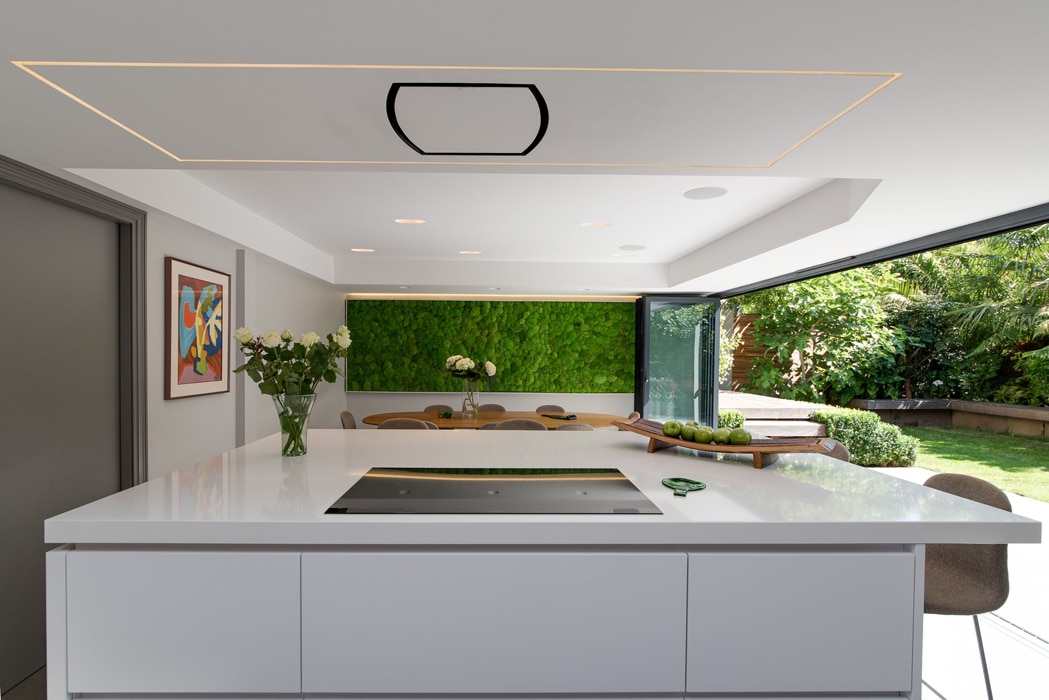
When we talk about standard UK sizes for bifold doors we are referring to the most commonly chosen panel and system configurations and sizes – with everything custom designed and made to order there are unlimited choices dimensions, panel configurations to suit every opening.
Knowing the more standard sizes will help you plan the most suitable configurations for your project, although with a of system designs we can crete a bespoke alternative to best suit your home.
External bifold doors
An external bifold door is typically wider and slightly taller than a standard French door or an internal door. There are variations between different bifold doors but typically there are some standards that most will use as a guideline:
- A standard external bifold door height is around 2,100mm, although our SF75eco door panels can go up to 3,500 mm tall
- The width of a bifold door will depend on the number of panels. Each panel will typically measure between 900 mm and 1,200mm.
- External apertures are designed with between two and six panels, any larger than that and sliding doors become the more preferred option.
- The smallest recommended opening for installing a new set of bifold doors is 1,800mm. This would be made from two 900mm-wide door leaves.
Internal bifold doors
Utilised for both residential and commercial applications, internal bifold doors are typically smaller and lighter because they do not need to incorporate the thermal-break technology that external doors do. In addition, the spaces that internal bifold doors fill tend to be narrower than their external counterparts:
- A standard internal bifold door height is around 2,000mm.
- The width of a bifold door will depend on the number of panels. Each panel will typically measure between 700mm and 1,000mm.
- Three or four-panel configurations are common, though the number of panels can be much larger for commercial applications such as offices, pubs and restaurants and varied to suit a range of uses and size requirements.
Bifold door panel size chart
Our bifold door panels can be up to 1200mm wide, whilst there are systems that can potentially go wider the weight and size of the panels can cause long-term issues with the doors dropping or stress on the hinges. In order to maximise the amount of glass we would typically recommend maximizing the width of each panel.
|
Opening width |
Typical number of panels |
|
Up to 2,400mm |
2 |
|
2,000mm – 3,600mm |
3 |
|
3,200mm – 4,800mm |
4 |
|
4,500mm – 6,000mm |
5 |
|
5,000mm – 7,200mm |
6 |
What are the standard UK sizes for sliding patio doors?
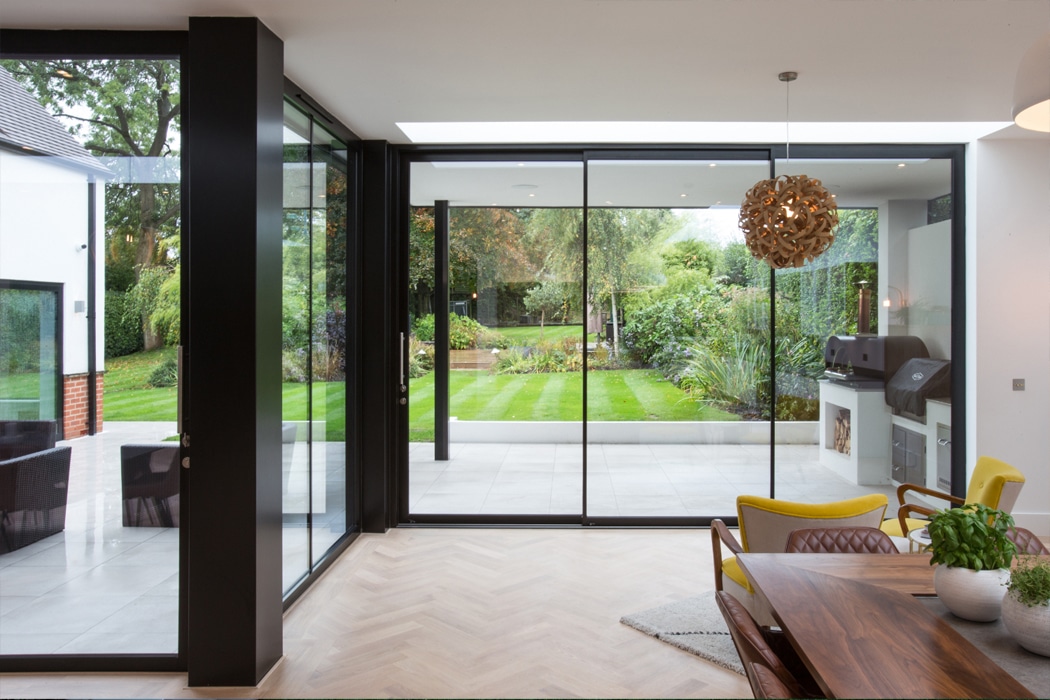
To fit standard patio door openings, the more standard height for a sliding patio door in the UK is around 2,100mm – though this may vary slightly depending on the manufacturer. This equates to the standard ceiling height of most homes in the UK.
Internal sliding doors
Single glazed internal sliding systems, such as our internal glass partitions, are incredibly versatile and are commonly used as room dividers, separating open plan spaces without losing light or sense of space. Standard sizes often cater to typical doorway widths, from 750mm upwards, for a single panel – all the way up to 10 metres wide for large open-plan living spaces.
External sliding doors
External sliding doors are an incredibly popular choice for patios and extensions. This is because of their ability to accommodate much larger individual glass panels and much narrower frames than bifold doors, offering near-uninterrupted views. This means panels can sometimes be significantly wider than ‘standard’ panel sizes.
Due to the range of panel combinations and feature options available, bespoke solutions are the most common solution, with the doors installed into newly formed openings for extensions or self-build homes.
Sliding door panel size chart
|
Opening width |
Typical number of panels |
Typical panel configuration |
|
1,800mm – 3,600mm |
2 Panels |
One fixed panel, one sliding panel |
|
2,400mm – |
3 Panels |
Two sliding panels and one fixed panel |
|
4,500mm – 10,000mm |
4 Panels |
Three panels sliding behind a single fixed frame |
|
8,000mm – 15,000mm |
6 panels |
Centre opening sets with two panels sliding behind a fixed frame at both sides. |
Tip – Panel configuration
“The number of panels impacts the width of the opening you create when the doors are slid open. When planning for a new set of doors consider the type of configuration that will provide the flexibility you need.
When considering the space you need, also think about how the doors will operate. Bifold doors require space for the panels to stack when open, whereas sliding doors slide within the track” – Edward Stobart, Technical Sales Manager
Getting the number of panels and configuration right is crucial, whatever the size of your aperture or the type of project you are undertaking.
- For sliding doors, opting for a smaller number of panels will reduce the amount of visible frame, but also reduce the width of the opening when the doors are slid back – for example, a 2-panel system features just one intermediate frame, but leaves only 50% clear opening when the panels are open.
- A larger number of panels will add additional frames, but can allow for up to 75% of the aperture to be open when the doors are slid back.
- With bifold doors, opting for more panels will increase the proportion of frame to glass, while also increasing the relative cost.
How to measure for bifold and sliding doors
When it comes to finalising the sizes of bifold and sliding doors there are two options. Either you opt for a site survey where one of our surveyors will come out and take the measurements from which we will manufacture the doors. For existing openings this is the most popular option because the apertures are already formed.
For newly formed openings on extensions and new-builds you will need to wait until the openings are created before a survey can happen, so opting to work from planned sizes is a popular option.
When it comes to taking measurements we’ve put the following advice together to help you plan the best configuration for your project – whether you choose bifold or sliding doors.
Step 1. Measure the width
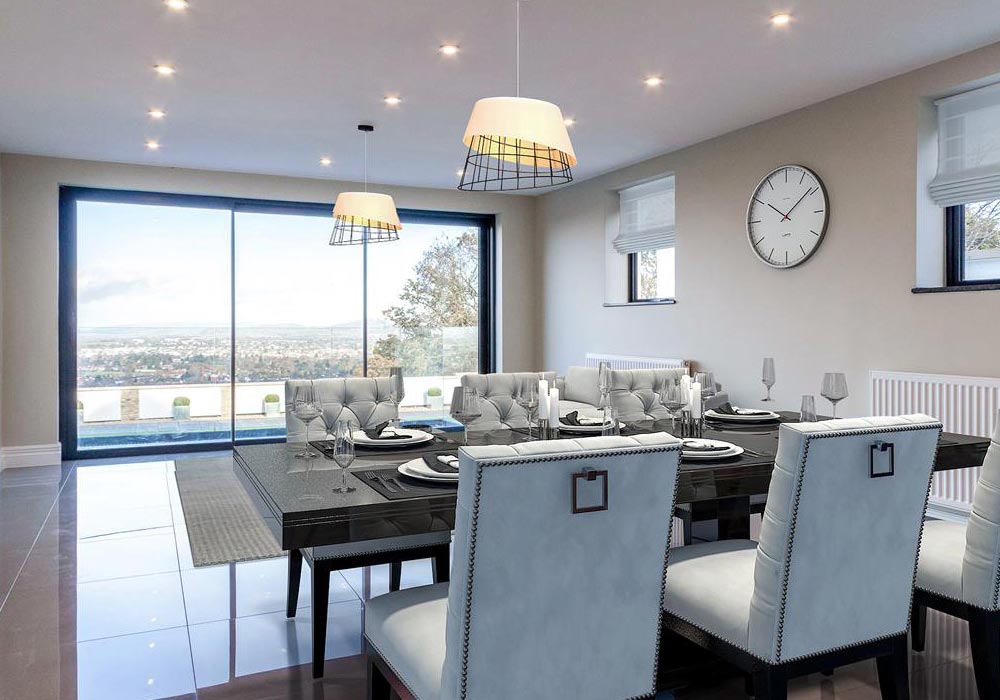
Measure the width of the opening from side to side at three different points: the top, middle, and bottom. Record the smallest of these three measurements. This is the figure to work from, as it ensures the new frame will not be too wide for the tightest point of the opening.
Tip – Working from planned sizes
“For new openings, it is a little bit easier if the aperture is already formed. But, if you cannot wait for the aperture to be formed before you order the doors, it is possible to manufacture doors from architectural drawings, based on planned sizes. This speeds up the lead-time to installation but places greater emphasis on a builder creating the openings to the right size.” – Edward Stobart, Technical Sales Manager.
Step 2. Measure the height
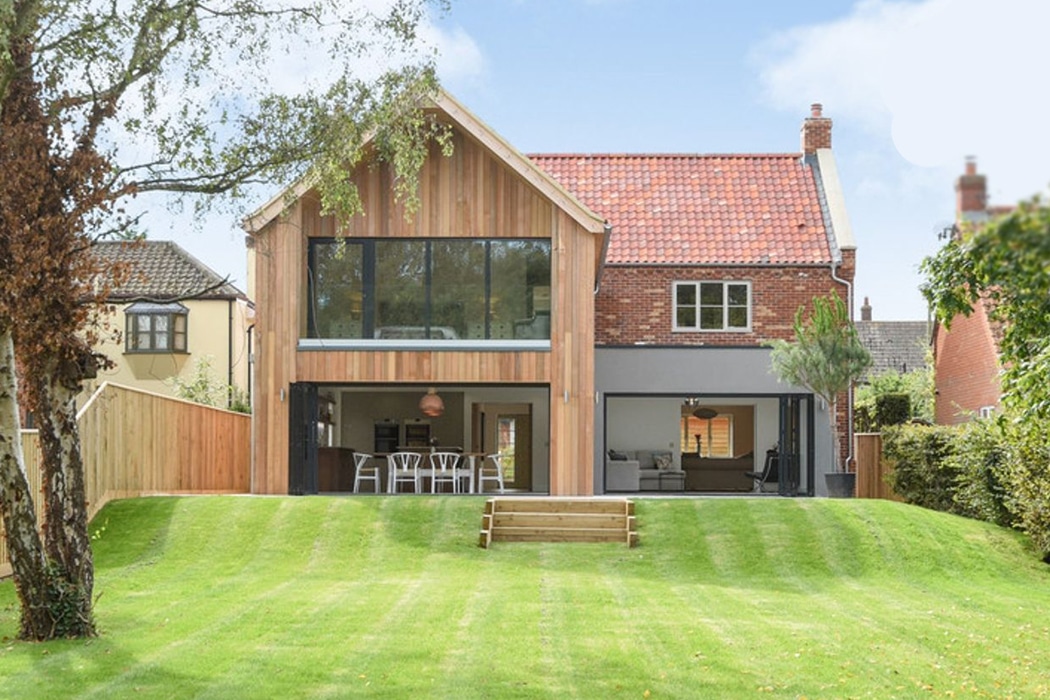
Next, measure the height of the opening from the lintel down to the base of the opening. Again, measure in three places. This time, left, middle, and right. Then record the smallest of these measurements.
When building the opening, it is absolutely crucial to know the depth of the track for the system you are choosing – especially if you are seeking to bring your floor level up to be flush with the threshold.
The depth of the track and the finished floor level needs to be factored into the height of the doors and the opening height built accordingly. For existing openings, this may mean having to cut down the base to be able to create the seamless finish between inside and out.
Tip – Measure in mm – twice
“It’s an old saying, but ‘measure twice, cut once’ remains very true and applies here too. After taking your initial measurements, measure again at least once to make sure it is accurate.
When providing measurements, make sure they are in millimeters. Slight variances even within the same opening will mean that getting the best fit for each specific set of doors – ensuring they not only fit when it comes to the installation but also that they operate smoothly time after time, year after year.” – Edward Stobart, Technical Sales Manager.
Step 3. Check if the opening is square
Measure the two diagonal dimensions of the opening, from the top-left corner to the bottom-right, and from the top-right corner to the bottom-left.
If the two measurements are the same, your opening is square. If they differ significantly, your installer will need this information to ensure the doors are manufactured to make a neat fit.
Tip – Factor in the frame
“One of the most common questions we get asked is, ‘How much smaller should bifold doors or sliding doors be than the opening?’
We typically advise a fitting tolerance of 6-8mm from the smallest width and height measurements. This 6-8mm gap allows the frame to be fitted perfectly square and plumb before being sealed.
The gap between the door frame and the brickwork is then concealed by sealant for a neat finish.” – Edward Stobart, Technical Sales Manager.
Why choose made-to-measure
When it comes to extensions and renovation projects no two openings are the same. In these cases, or for homeowners seeking a truly premium finish, ordering made-to-measure doors is the ideal solution:
- Opting for a bespoke system means you are not limited by off-the-shelf dimensions.
- Bespoke doors are manufactured to the precise measurements of your aperture and designed to be the best possible configuration.
- A custom-made door gives you control over every detail. You can specify the exact number of panels, the opening configuration.
- Because the door system is engineered specifically for your project, every component works in harmony. This leads to smoother operation and long-term durability compared to a standard-sized door that has been adjusted to fit.
Tip – Go bespoke, don’t cut back
“Do not limit your options, whilst it is might seem like you are getting a better deal going for an off-the-shelf ‘standard’ size the costs involved in adjusting the size of the aperture to fit the standard size can potentially costs as much, if not more, as choosing a completely bespoke set of doors to start with. It’s best to have bespoke doors made to measure for long-term peace of mind.” – Edward Stobart, Technical Sales Manager.
Bring your project to life with IDSystems
Your initial measurements are important starting point for a conversation and an initial quote. Armed with your dimensions, the next step is to speak to an expert. Our team can discuss your options, from security features and materials to planning permission requirements and the unique benefits of bifold doors.
Ready to get a precise quote for your project? Contact the IDSystems team today or visit our virtual showroom to see our products up close.
